How Oral Teaching Passes Knowledge Between Generations
Oral teaching passes knowledge through speech, demonstration and listening. Learn how to choose a method that helps learners remember and use what they hear.
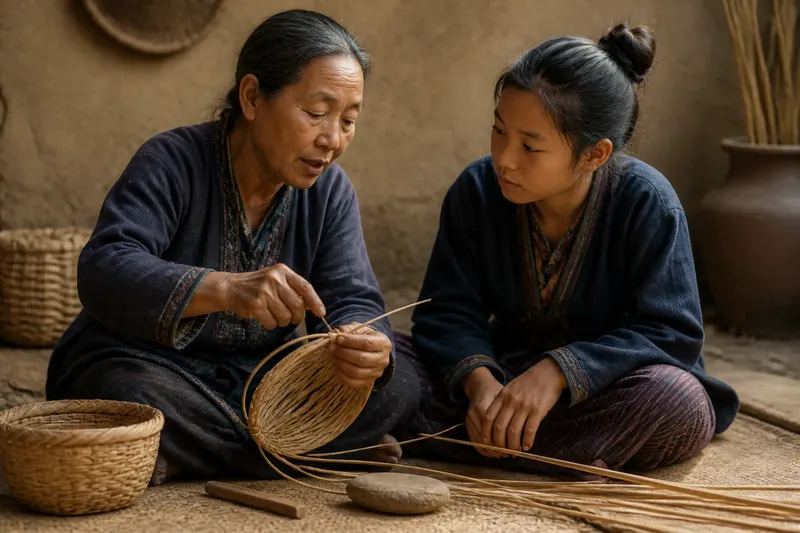
Oral teaching can help a learner remember a planting instruction by hearing it beside the field, watching the action and trying it in turn. Across different communities and settings, people have passed on knowledge through spoken teaching; the methods and purposes vary, so there is no single account of how this happened before textbooks.
Some teaching relies on repeated words, some on demonstration, and some on discussion between speaker and listeners. The useful choice depends on what must be remembered, what learners need to do, and which parts of the account may change.
Repetition for wording
Repetition can help learners retain material whose sequence or phrasing matters, such as directions, a recitation or words used in a ceremony. Hearing a passage again gives it a recognisable pattern; saying it back gives the teacher a chance to hear where the learner is unsure.
Keep the exchange active. Offer a short phrase, pause for the learner to repeat it, then invite a question about its meaning or use. When judgement matters, pair recitation with explanation or demonstration: remembering an instruction does not by itself show when it applies.
Performance for skill
Demonstration helps when timing, movement or attention to a setting carries part of the knowledge. A craft teacher might show how to position a tool while describing the material’s response; a storyteller might use pace and gesture to make a change in the tale clear.
Ask learners to imitate the action and describe the cues they noticed. This makes it easier to spot a misunderstanding, such as copying a movement without noticing the condition that prompted it. Also distinguish stable instructions from a performer’s choices, such as emphasis or pacing.
Listeners as participants
Listeners can help sustain oral knowledge by asking for a phrase again, retelling an account or pointing out a difference between versions. Their questions also give the speaker a chance to explain what is remembered, what is uncertain and what may vary by place or circumstance.
Do not treat agreement or confidence as proof that a detail is correct. If continuity matters, make room for listeners to say they are unsure and distinguish a remembered account from a new interpretation.
Choosing oral teaching?
When does repetition help?
Use repetition when learners need to recall a sequence or shared wording. Ask them to say it back, then explain any phrase they cannot yet connect to its purpose.
When is demonstration useful?
Use demonstration when movement, timing or visible conditions affect the task. Let learners observe, imitate and describe what they used to decide how to act.
How can listeners help?
Invite listeners to retell, ask questions and mark uncertain details. If interpretations differ, discuss whether the difference reflects a mistake, local variation or a new suggestion rather than assuming one answer.
A worked route lesson
Say you want to teach a neighbour a local walking route with two turns that are easy to confuse. First, name the turns in order; next, point out a recognisable landmark at each one; then ask your neighbour to lead the return journey using those landmarks. If they name the turns correctly but choose the wrong landmark, the observable result is a specific gap to clarify before relying on the directions. If they can connect each turn to its landmark, they have shown that they can use the spoken sequence alongside visible cues.
Keeping a telling clear
Before teaching, decide what must remain stable and what may vary. For a route, the turns may need to stay in order while the wording changes; for a story, the sequence may matter more than the performer’s pace. Tell learners which is which, and invite them to repeat or demonstrate the parts they are expected to carry forward.
For oral teaching, the practical aim is not simply to make a telling memorable. Give the next person a chance to use the knowledge, ask about uncertain parts and pass it on with its limits intact.